Integration Services
 Business Consulting & Advisory
 AI Solutions
 AppExchange Development
 Tailored Salesforce Engineering
 Managed Services
 Implementation

What keeps insurance customers loyal to some insurers for decades when they can switch to competitors with just a few clicks? The answer usually isn’t the price; it’s the relationship quality that matters more. Customers often stick with insurance companies that know them, respond quickly, simplify things, and make them feel valued. Whereas companies that treat everyone the same way with generic approaches lose ground fast to competitors who understand that building strong customer relationships drives loyalty in insurance.
The data backs this up clearly: according to the 2024 State of Customer Service and CX Study, 81% of customers prefer companies that offer a personalized experience. For CIOs and Digital Leaders in insurance, these statistics should be a wake-up call.
The right enterprise CRM for insurance can turn customer information into a powerful competitive weapon. This detailed post breaks down how CRM systems work in insurance, why they matter so much for competitive positioning, what lessons CIOs and digital leaders should learn, and where the insurance industry is heading next.

Table of Content
- What Is the Role of CRMs in Insurance Businesses?
- What Are the Different Types of CRM Software for Insurance Businesses?
- What Makes CRM a Key Competitive Differentiator for Insurers?
- What Are the Key Challenges for Insurance Companies?
- What Are the Key Lessons for Insurance CIOs and Digital Leaders?
- How to Choose the Right CRM for Insurance Businesses?
- What Is the Future Outlook of CRM for the Insurance Industry?
- InsuraCRM – Enterprise CRM for Insurance and Finance
- Summing Up
What Is the Role of CRMs in Insurance Businesses?
The role of CRM for the insurance industry keeps expanding beyond basic record keeping. These platforms now analyse customer data to find prospects most likely to buy additional coverage. They also send alerts to insurance agents when customers reach life milestones like marriage or retirement.
CRMs for insurance have become central hubs where marketing, sales, and service teams all work together. They automate repetitive tasks like sending policy documents and birthday wishes to clients. Insurance companies use CRMs to measure customer satisfaction and improve their services continuously.
“Trust is our number one value. Building AI at Salesforce means establishing rigorous governance, eliminating harmful bias, and ensuring our technology is used responsibly.”
– Kathy Baxter, Principal Architect, Responsible AI & Tech at Salesforce.
What Are the Different Types of CRM Software for Insurance Businesses?
Not all CRM software works the same for insurance businesses. Check out the different types from operational to strategic that serve various requirements.
| CRM Type | Key Features | Ideal For |
|---|---|---|
|
Operational |
|
Small-mid agencies prioritizing sales and onboarding |
|
Analytical |
|
Large insurers focused on risk insights and decisions |
|
Collaborative |
|
Brokers and multi-agent teams managing joint clients |
|
Strategic |
|
Enterprise insurers planning retention and growth strategies |
What Makes CRM a Key Competitive Differentiator for Insurers?
The right CRM transforms how insurance businesses compete in the market. Check out the key advantages from faster quote generation to streamlined claims support and tracking that make CRM a competitive differentiator.
1. Faster Quote Generation and Policy Comparison
An insurance CRM platform allows agents to create quotes from multiple carriers in minutes rather than spending hours switching between different carrier websites. Agents input client information once, and the system retrieves pricing from various insurance companies automatically for side-by-side comparison.
Quick quote generation means potential customers get answers during their first call instead of waiting days for callbacks. Speed matters because prospects often contact several agencies, and the first broker providing competitive quotes usually wins the business over slower competitors still gathering information.
2. Automated Policy Renewal Management
CRM software for insurance companies automatically tracks renewal dates for every client policy, sending alerts to agents months before expiration. The system can trigger email sequences to customers, reminding them about upcoming renewals and suggesting coverage reviews to ensure adequate protection.
Automated renewal tracking prevents policies from lapsing because someone forgot to follow up at the right time. Agencies using enterprise CRM for insurance retain more clients because systematic renewal processes ensure no policy falls through the cracks during busy periods when agents juggle many responsibilities simultaneously.
3. Complete Client Communication History
Every phone call, email, text message, and meeting with each client gets recorded in one central location accessible to all agency staff. Any agent can review past conversations and understand client situations even if the original agent is unavailable or has left the company.
Complete communication history prevents embarrassing situations where agents ask clients for information already provided multiple times. CRM software for insurance companies ensures consistent service quality regardless of which team member helps a customer, building trust through seamless interactions across the entire agency.
4. Enhanced Cross-Selling and Up-Selling Opportunities
CRM systems identify clients with coverage gaps by analyzing their current policies and comparing them against typical protection needs for similar customers. The system alerts agents when clients might benefit from additional coverage, like umbrella policies, life insurance, or business protection, that they don’t currently have.
Data-driven cross-selling recommendations help agents provide better protection while increasing agency revenue. Enterprise CRM for insurance tracks which products each client owns, making it easy to spot opportunities that manual record-keeping systems miss, especially when managing hundreds or thousands of client relationships.
5. Improved Lead Management and Conversion
CRM systems track every potential customer from initial inquiry through policy purchase, showing which leads are hot prospects versus those needing more nurturing over time. Lead scoring ranks prospects by their likelihood to buy and potential policy value, helping agents prioritize time effectively.
Organized lead management prevents prospects from being forgotten or lost in email folders and scattered spreadsheets. CRM in insurance industry settings ensures consistent follow-up on every inquiry, converting more prospects into clients because systematic processes replace haphazard approaches that miss opportunities.
6. Mobile Access for Field Agents
Agents working remotely or meeting clients outside need to access complete client information, policy details, and carrier resources through mobile CRM apps. Mobile access means agents answer questions and provide quotes during client meetings rather than promising to follow up after returning to the office.
Field mobility gives independent agents flexibility, competing with captive agents who might only work office hours. Enterprise insurance platforms with strong mobile capabilities allow agents to serve clients whenever and wherever needed, providing convenience that busy customers value and remember when renewal time arrives.
7. Data-Driven Business Analytics and Reporting
Insurance agencies use CRM analytics to understand which products generate the most revenue, which carriers provide the best commissions, and which marketing sources deliver the most valuable clients. Dashboards display key metrics like policies sold, retention rates, and agent productivity without manual spreadsheet work.
Data insights help agencies make smarter business decisions about which products to emphasize, where to invest marketing dollars, and how to allocate agent time for maximum profitability. Enterprise CRM for insurance provides the analytical capabilities that turn raw transaction data into strategic business intelligence, guiding growth and improvement.
8. Streamlined Claims Support and Tracking
When clients file claims, CRM software for insurance companies tracks the entire process from initial report through settlement. Agents document conversations with adjusters, update clients on progress, and maintain complete claims histories that help resolve issues and answer questions quickly.
Proactive claims support during stressful situations builds exceptional client loyalty because people remember agencies that helped them effectively when they needed it most. Good claims handling through CRM turns potentially negative experiences into relationship-strengthening moments that generate referrals and long-term retention.
What Are the Key Challenges for Insurance Companies?
Knowing your challenges is the first step to fixing them. This table breaks down the biggest roadblocks in the industry, how they impact daily operations, and possible solutions to overcome the obstacles.
| Challenge | Impact | Possible Solution |
|---|---|---|
|
Customer data silos |
Poor personalization and retention |
Integrated CRM and data unification |
|
Rising cyber threats |
Massive data breaches and financial losses |
AI-driven threat detection and encryption |
|
Fraudulent claims |
Billions in annual losses |
Machine learning fraud detection |
|
Talent shortage in tech |
Slow digital transformation |
Upskilling programs and AI automation |
|
Regulatory compliance |
Heavy fines and operational disruptions |
Automated compliance monitoring tools |
Best Insurance CRM Software for Brokers, Agents, and Carriers in 2026
What Are the Key Lessons for Insurance CIOs and Digital Leaders?
Every insurance leader faces tough choices about technology and customer experience. Dive into the key lessons that can help CIOs and digital leaders navigate change and drive better outcomes.
I. Connect All Your Systems Together
Insurance companies use different software for claims, billing, underwriting, and customer service. Leaders must ensure their CRM connects with all these systems, so information flows smoothly. When everything works together, employees see complete customer information without switching between multiple programs.
II. Leverage Data to Spot At-Risk Customers
CRM systems can identify customers who might switch to competitors by tracking complaint patterns, payment delays, or reduced engagement. Leaders should use this information to reach out proactively with solutions or better offers before customers leave.
III. Train Teams Properly on CRM Tools
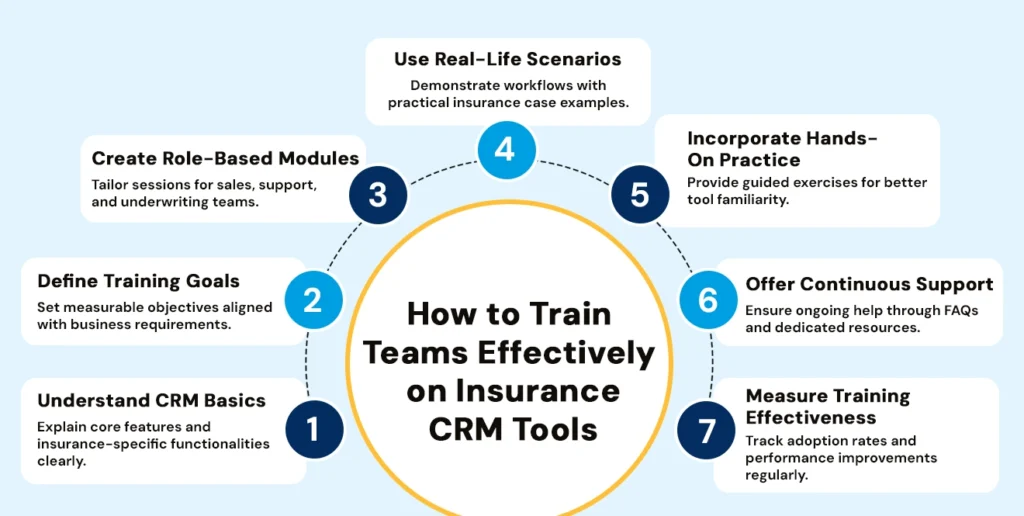
Even the best CRM software for insurance companies fails if employees don’t know how to use it correctly. Leaders must invest time in training sessions, create simple guides, and assign helpers who can answer questions. Well-trained teams use the system consistently and accurately.
IV. Track Agent Performance Clearly
Leaders need to see which agents close the most sales, maintain happy customers, and respond fastest to inquiries. CRM dashboards show these metrics clearly, helping managers identify top performers to reward and struggling agents who need additional support or training.
V. Protect Customer Information Seriously
Insurance CRM systems contain sensitive personal and financial data. Leaders must implement strong security measures, regular backups, and access controls. Customers trust insurance companies with private information, and one data breach can destroy that trust and damage the company’s reputation permanently.
VI. Plan for Growth and Scaling
Small insurance companies might start with basic CRM features, but they need systems that grow with them. Leaders must choose an insurance CRM platform that can handle more customers, additional product lines, and new branches without requiring a complete system replacement later.
VII. Make Mobile Access a Priority
Insurance agents often meet clients at homes, cafes, or after accidents. They need to access customer information, update records, and process requests from their phones or tablets. Leaders must ensure their mobile-friendly enterprise insurance platforms let agents work from anywhere and respond to customers quickly.
How to Choose the Right CRM for Insurance Businesses?
Making the right CRM choice prevents costly mistakes and disappointments. Explore the key selection criteria that help insurance businesses make smart choices.
1. Check If It Handles Policy Management Easily
The CRM should let insurance agents track all policies in one place. It must show renewal dates, premium amounts, and customer details without making agents jump between different screens. This saves time and reduces mistakes when managing client policies.
2. Look for Tools That Help with Claims Tracking
A good insurance CRM lets agents follow each claim from start to finish. Agents should see which claims are pending, approved, or rejected. This helps update customers quickly and keeps everything organized during the claims process.
3. Make Sure It Sends Automatic Reminders to Customers
The CRM should alert customers about policy renewals, payment dues, and important deadlines without agents doing it manually. These automated messages keep clients informed and help them avoid missing payments, which means better relationships and fewer policy lapses.
4. Check If It Creates Reports About Sales Performance
Insurance businesses need a CRM that shows how many policies were sold, which ones are popular, and where the business is growing. These reports help understand what’s working and where the team needs to improve insurance sales efforts.
5. Confirm It Works with Existing Insurance Software
The CRM must connect smoothly with other tools already in use, like policy management systems or accounting software. When everything works together, agents don’t have to enter the same information twice, which prevents errors and saves hours of work.
What Is the Future Outlook of CRM for the Insurance Industry?
The future shows CRM for the insurance industry becoming essential to win more customers and earn higher profits. These systems will predict when people need new policies or want to make changes. They will also empower insurance agents by letting them know exactly what each customer needs before they even ask.
A recent report reveals that the insurance CRM software market size is projected to reach 16.64 billion USD by 2032. Companies using modern CRMs for insurance will respond to claims faster and keep customers happier. The software will automatically send personalized policy recommendations based on special events, like buying homes or having babies. Insurance companies that master CRM tools will dominate their markets and leave competitors struggling behind.
Ready to Modernize Your Insurance CRM?
InsuraCRM – Enterprise CRM for Insurance and Finance
Running an insurance company means handling lots of information daily. Achieva’s InsuraCRM puts everything in one place. Workers spend less time searching for files and more time helping customers. The system does repetitive work automatically, letting people focus on important stuff.
The platform is easy to understand and use. New employees learn it quickly without needing weeks of training. It works on phones and on computers equally well. Your business saves money while providing better service to customers who trust you with their policies.
Key Features of InsuraCRM:
- Stores customer information in one spot
- Sends automatic reminders for renewals
- Tracks sales team performance daily
- Manages agent commissions and payments
- Works perfectly on mobile devices
Summing Up
In insurance, the companies that truly know their customers and treat them well are building unbeatable advantages. This comprehensive examination of CRM’s role, competitive benefits, essential lessons, and industry direction reveals that relationship quality now matters more than traditional differentiators. Technology leaders in insurance who understand this are positioning their companies for sustained success.
The path forward is straightforward for insurance CIOs and digital leaders: make customer relationship excellence a strategic priority, not just an operational tool. Invest adequately in capabilities that improve customer experiences. Train everyone in the organization to think relationship-first. The future belongs to insurers who build genuine connections rather than just selling policies. If you also want to build loyalty that pricing competition can’t even break, you may seek help from a trusted insurance digital transformation company.