Integration Services
 Business Consulting & Advisory
 AI Solutions
 AppExchange Development
 Tailored Salesforce Engineering
 Managed Services
 Implementation

What if every customer interaction could feel personalized without overwhelming the team? Einstein AI makes this possible by analyzing customer data instantly and suggesting exactly what each customer needs. It helps marketing, sales, and service teams work faster while making customers feel genuinely understood and valued.
According to recent data, Salesforce customers using Einstein AI have reported an average 38% increase in employee productivity and a 45% increase in customer satisfaction. Nearly a 50% increment in CSAT demonstrates how Einstein AI transforms customer interactions from marketing and sales to service. Building on this transformation, it’s important to understand the key components and challenges & considerations of Einstein AI. At the same time, navigating the future of AI-powered customer engagement and popular use cases of Einstein AI are equally important.

Table of Content
- How Einstein AI Drives Smarter Customer Engagement
- How Does Einstein AI in Marketing Personalize Customer Journeys with Intelligent Engagement?
- How Does Einstein AI in Sales Drive Conversions with Intelligent Engagement?
- How Does Einstein AI in Service Enhance Customer Support and Satisfaction?
- What Are the Key Components of Einstein by Salesforce?
- What Are the Key Challenges and Considerations of Salesforce Einstein AI?
- What Is the Future of AI-Powered Customer Engagement?
- Summing Up
How Does Einstein AI in Marketing Personalize Customer Journeys with Intelligent Engagement?
Every customer is different, yet most marketing messages treat them the same. Einstein AI in Marketing transforms engagement by using real data to engage each customer at the right time, in the right way.
1. Predicting What Each Customer Is Likely to Do Next
Marketing teams often guess what a customer might want based on broad assumptions. This guesswork leads to campaigns that miss the mark since the messages feel completely irrelevant to them.
Einstein AI analyzes each customer’s individual behavior and predicts what they are most likely to do next. Marketing teams can then reach out with content or offers that match where each customer is on their buying journey, rather than where the team assumes they might be.
2. Sending Messages at the Time Each Person Is Most Likely to Engage
Sending an email at nine in the morning works well for some customers and gets completely ignored by others. Einstein AI tracks when each individual customer typically opens emails, clicks through content, or responds to offers. It then schedules outreach to land at the precise time that person is most active. Open rates improve, click-throughs go up, and the customer receives messages when they are actually in a headspace to engage with them.
3. Choosing the Right Channel for Each Customer Automatically
Some customers respond well to emails. Others engage through SMS, push notifications, or social media. Sending every message through the same channel means a large portion of the audience is being reached through a channel they barely pay attention to.
Einstein AI in Salesforce Marketing Cloud monitors how each customer interacts across different channels and learns which one drives the best response for that individual. The system then routes messages through the channel most likely to get a reaction from each specific person, without the marketing team having to manually segment and manage those decisions themselves.
4. Scoring Leads So Marketing Effort Goes to the Right People
Not every person who signs up for a newsletter or downloads a guide is equally likely to become a customer. Without a way to tell who is seriously interested and who is just browsing, marketing teams invest effort evenly across everyone and miss the people most worth focusing on.
Einstein AI assigns a score to each lead based on their behavior and how closely they match the profile of people who have converted in the past. Marketing teams use these scores to prioritize follow-up, tailor the intensity of their outreach, and hand off the most engaged leads to sales at exactly the right moment in the customer’s journey.
5. Recommending the Next Best Product or Offer for Each Customer
After a customer makes a purchase or completes a specific action, there is a short window where they are still engaged and open to hearing more. Generic follow-up messages that suggest random products waste this window and often leave customers feeling like the brand does not know them at all.
Einstein AI analyses what a customer just did and cross-references it with the behavior of similar customers to recommend the most relevant next product, content piece, or offer. These recommendations land while the customer’s interest is still high, making it far more likely they will take the next step rather than disengaging entirely.
Data Genius at Work: How Salesforce Einstein Analytics Powers Smarter Business Decisions
6. Reducing Churn by Identifying At-Risk Customers Early
By the time a customer cancels a subscription, stops buying, or disengages completely, it is usually too late for a marketing team to make a meaningful difference. Most businesses only notice customers are leaving after they have already gone, which gives them no real opportunity to step in.
Einstein AI monitors behavioral signals that indicate a customer is starting to pull back and flags them before they reach the point of no return. Marketing teams can then trigger a personalized re-engagement campaign while there is still a genuine chance of keeping that customer in the journey.
7. Personalizing Email Content for Every Individual at Scale
Writing a personalized email for one customer is easy. Writing one for ten thousand customers, each with a different purchase history and set of interests, is impossible to do manually. Most marketing teams settle for a few basic versions and send whichever one fits the broadest group.
Einstein AI generates dynamic email content that adapts based on what each recipient has previously bought, browsed, or shown interest in. The subject line, the product shown, and the offer presented can all change per recipient automatically. What lands in one person’s inbox looks meaningfully different from what another person receives, even though the same campaign created both.
How Does Einstein AI in Sales Drive Conversions with Intelligent Engagement?
Einstein AI acts like an additional team member who never sleeps. It constantly reviews sales data to identify the best opportunities to engage customers. Here’s how technology helps team close more deals daily with less effort.
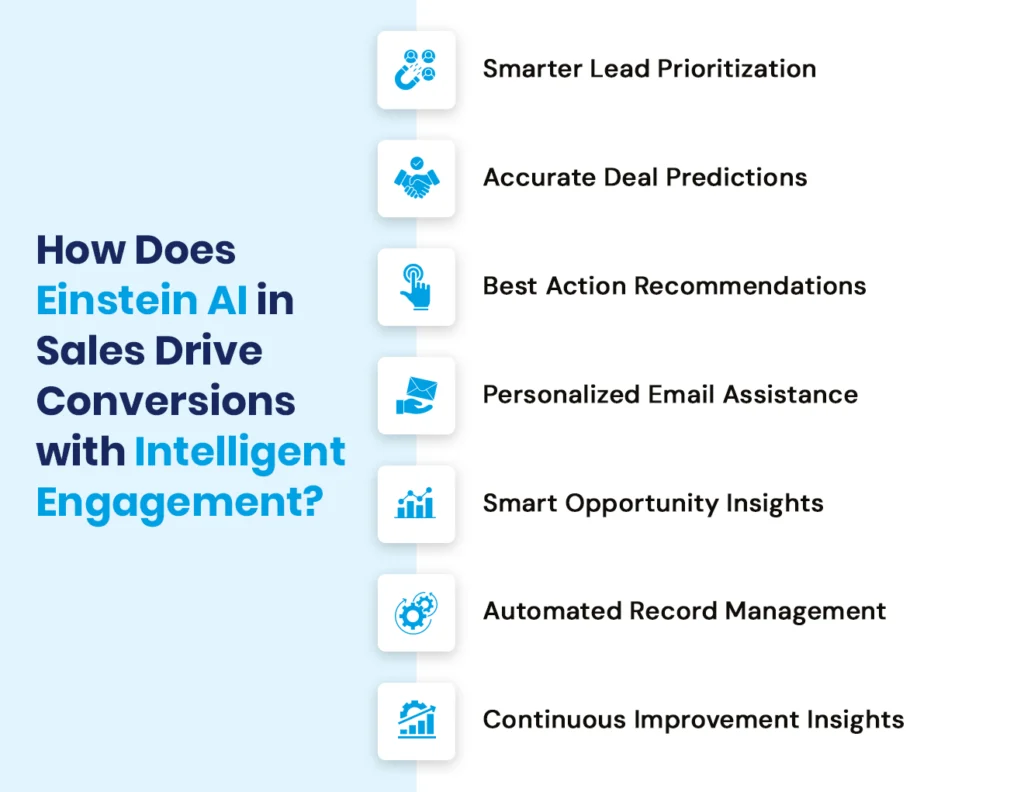
I. Smarter Lead Prioritization
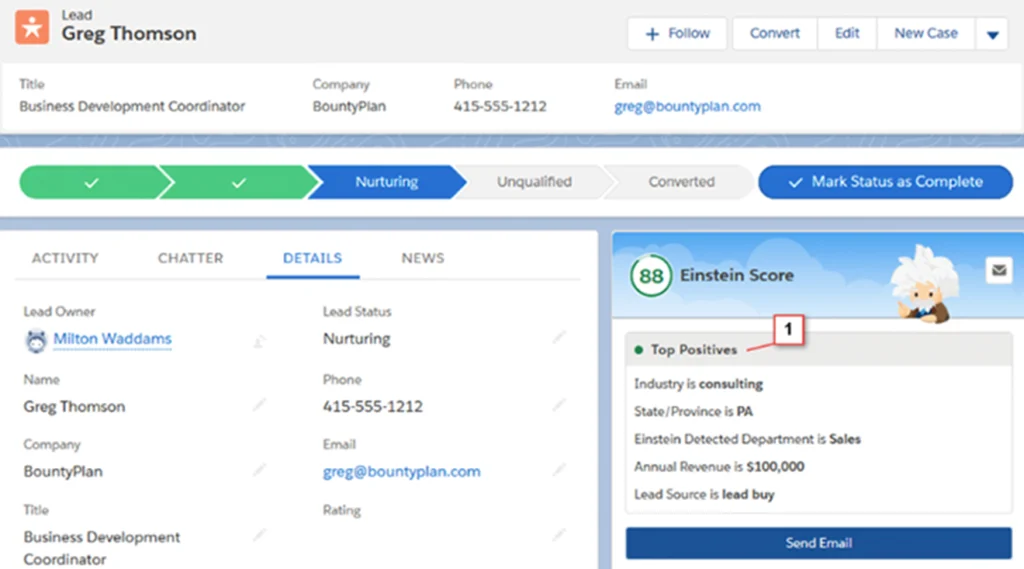
Einstein AI analyzes all leads and sorts them by who’s most ready to buy. It checks aspects like how often they visit the website, what emails they open, and if they match the best past customers. The system then gives each lead a score showing how hot they are.
Sales people can focus first on the highest-scoring leads instead of guessing who might buy. This saves time and helps close more deals faster. Salesforce Einstein AI keeps updating scores as leads take new actions, so the list always stays current.
II. Accurate Deal Predictions
Salesforce Einstein studies past sales data to predict how existing deals will go. It looks at deal size, how long similar deals took, and how much contact you’ve had with the customer. Then it estimates the chance each deal will close successfully. These predictions help managers plan better and spot deals that might require extra help.
Sales teams can see which opportunities are most likely to happen this month. The system gets smarter over time as it learns from more of sales.
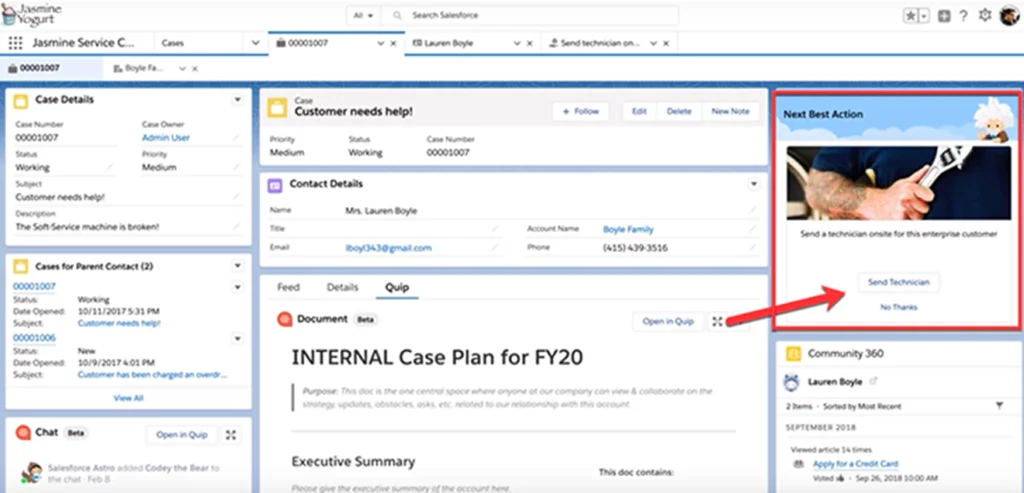
III. Best Action Recommendations
Einstein AI suggests the most useful actions for each sales opportunity. It might say, “Send pricing info now” or “Schedule a product demo.” These tips come from seeing what worked for similar customers in the past.
Salespeople get helpful reminders, so they don’t forget important steps. Salesforce Einstein AI also recommends the best times to contact each lead for better responses. These smart suggestions help move deals forward quickly and more smoothly.
IV. Personalized Email Assistance
Einstein AI helps write better sales emails that get replies. It suggests subject lines that get opened and content that matches each customer’s interests. Based on past successful emails, it can even draft complete messages. The system recommends the best times to send emails for each contact.
This helps salespeople save hours while sending more effective communications. Customers also get relevant messages instead of generic ones. This personal touch makes prospects more likely to respond and move forward in the sales process.
V. Smart Opportunity Insights
Salesforce AI Einstein spots potential problems in deals before they occur. It notices when customer engagement drops or key decision-makers haven’t been contacted. The system alerts sales teams about risks like deals that might stall or go to competitors. These early warnings give sales reps time to fix issues.
Salesforce Einstein AI also highlights which opportunities need immediate attention. Instead of finding out too late, salespeople can take action while there’s still time to save the deal. These insights help teams focus on what matters most right now.
“Einstein Opportunity Insights helps sales reps prioritize deals with the highest likelihood to close.”
– Sarah Franklin, CEO of Lattice.VI. Automated Record Management
Einstein AI automatically updates customer records in Salesforce. When salespeople make calls or send emails, the system logs these activities without manual entry. It pulls important details from conversations and adds them to the right contact records. This keeps information accurate and up-to-date. Owing to this, sales reps spend less time inputting data and more time selling.
Furthermore, managers get better visibility into team activities. Customers receive more consistent service since all their details are relevant. The system works quietly in the background, making sure no important information gets missed or forgotten.
VII. Continuous Improvement Insights
Salesforce Einstein learns from every successful and unsuccessful deal. It identifies which sales approaches work best for different customers. These insights help the whole sales team improve gradually. Managers see which techniques get results and where coaching is needed. The system spots patterns humans might miss, like which product demos lead to the fastest closes.
Salespeople get personalized tips based on their own performance. As more deals happen, the suggestions get even better. This constant learning means the sales process keeps improving, helping teams close more deals with less effort.
Assessing Potential of Salesforce Einstein GPT: Revolutionizing AI in CRM
How Does Einstein AI in Service Enhance Customer Support and Satisfaction?
Salesforce Einstein AI helps support teams to work smarter. It understands customer needs quickly to provide better, faster help. Technology makes service smoother for both agents and customers. Here’s how it improves everyday support experiences.
1. Faster Answers to Common Questions
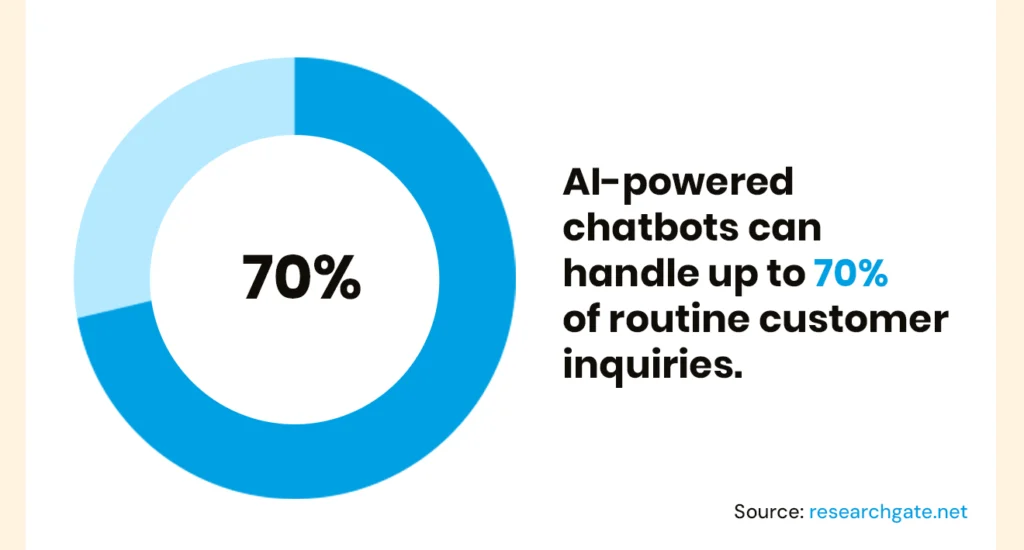
Einstein AI powers chatbots that answer 4,000 questions in an average month. When customers ask about order status or return policies, the chatbot replies instantly with accurate information. It learns from past conversations to improve its answers over time. This means shorter wait times for customers looking for instant help.
Customers enjoy faster service without phone calls or long email waits, and agents have more time for complex cases that need human assistance. The chatbot also works 24/7, so customers can get help anytime, even outside business hours. Fast answers lead to happier customers who don’t get frustrated waiting.
“Einstein Bots are revolutionizing service by handling routine queries, allowing agents to tackle complex issues.”
– Bill Patterson, EVP, Corporate Strategy at Salesforce.
2. Smarter Case Routing
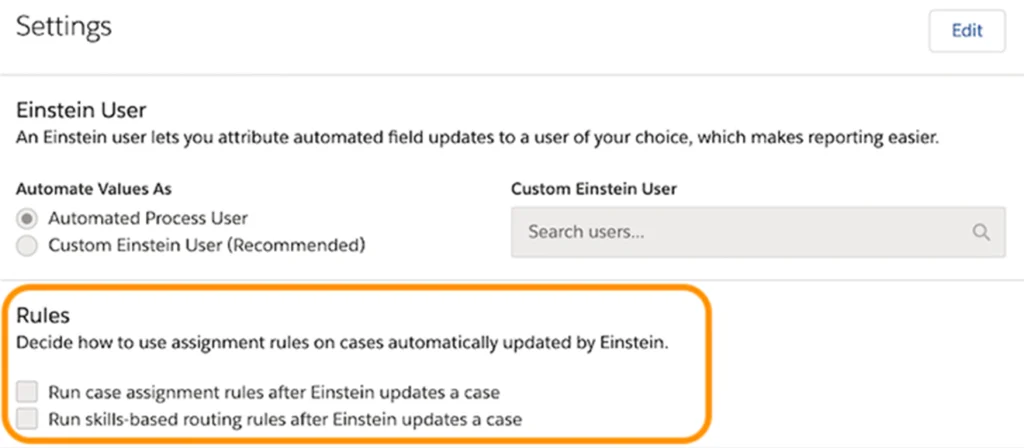
Salesforce Einstein automatically sends each support ticket to the best agent. It reads the customer’s problem and matches it to agents who’ve solved similar issues before. As a result, specialists get cases in their area of expertise.
Not only this, but customers also connect with someone who understands their pain points immediately. No more frustrating transfers between departments. The right agent starts helping from the first contact. This reduces resolution time and improves first-contact solutions. Both customers and agents save a significant amount of time.
3. Helpful Agent Suggestions
While agents work on cases, Salesforce Einstein for service shows them solutions that work for similar problems. It displays relevant knowledge articles and past successful resolutions. Agents see these helpful tips right on their screen as they work. They invest less time looking for answers and more time aiding customers.
The suggestions improve accuracy and consistency in responses. New agents especially benefit from this guided help. As a result, customers get reliable answers faster from better-supported agents.
4. Spotting Urgent Issues Early
Einstein notices warning signs in customer cases before they escalate. It detects frustrated customers, repeating problems, or high-priority issues automatically. The system alerts supervisors about cases needing immediate attention. This enables teams to intervene before small frustrations become big complaints.
As a result, critical situations get prioritized in the queue. This proactive approach prevents many bad experiences from happening. Furthermore, support becomes more thoughtful than reactive.
5. Personalized Support Experience
Einstein remembers each customer’s history and preferences. When customers contact support, Einstein sees their past purchases, previous issues, and preferences immediately. Owing to this, customers don’t need to recall their issue every time they call. The system can even greet them by name and reference past interactions. This makes customers feel valued as individuals rather than just ticket numbers.
The Salesforce Einstein platform provides more relevant help since it understands the full context. As a result, customers spend less time explaining and more time getting their problems solved. Personal touches like these improve customer satisfaction.
6. Automatic Case Updates
Salesforce Einstein keeps customers informed without agent effort. When their case status changes, like when an agent starts working on it or when a solution is found, Salesforce AI Einstein sends automatic updates. As a result, customers always know what’s happening with their request through email or text. This reduces repeat calls by asking, “What’s the status?” Furthermore, agents save significant time they’d spend on providing updates manually.
Customers also appreciate being kept in the loop without having to ask. Not to mention, clear communication builds trust in the support process.
7. Learning from Every Interaction
After each support case closes, Salesforce Einstein for service studies what worked best. It looks at which solutions satisfy customers’ fastest. The AI notices patterns in successful resolutions. Over time, it gets better at suggesting these proven solutions first. The system continuously improves by learning from every agent’s experience. What works for one agent becomes knowledge for the whole team. This means customers get consistently reliable support that keeps getting better.
How to Drive Smarter, Personalized Customer Engagement in 2026
What Are the Key Components of Einstein by Salesforce?
What makes Einstein AI so useful? It’s the combination of these essential components that allows the system to learn from information and offer practical guidance for everyday business decisions.
1. Einstein Analytics
- Einstein Discovery: Analyzes data to predict outcomes and recommend actions.
- Einstein Dashboards: AI dashboards with automated insights.
- Einstein Next Best Action: Recommends optimal actions for sales, service, or marketing.
2. Einstein for Sales
- Einstein Opportunity Insights: Predicts deal risks and suggests next steps.
- Einstein Activity Capture: Automatically logs emails and meetings in Salesforce.
- Einstein Forecasting: Uses AI to improve sales forecasting accuracy.
- Einstein Conversation Insights: Analyzes sales calls for key trends and coaching opportunities.
3. Einstein for Service
- Einstein Case Classification: Automatically categorizes support cases.
- Einstein Case Routing: Directs cases to the best-suited agent.
- Einstein Reply Recommendations: Suggests responses to customer inquiries.
- Einstein Bots: AI-powered chatbots for automated customer service.
4. Einstein for Marketing
- Einstein Engagement Scoring: Predicts customer engagement likelihood.
- Einstein Send Time Optimization: Recommends the best time to send emails.
- Einstein Content Selection: Personalizes content for different audiences.
- Einstein Attribution: Measures marketing campaign effectiveness.
5. Einstein for Commerce (B2B & B2C)
- Einstein Product Recommendations: AI-driven personalized product suggestions.
- Einstein Search Recommendations: Enhances search results in ecommerce.
6. Einstein Copilot (Generative AI Features)
- AI Chat Assistant: Helps users get insights, generate content, and automate tasks.
- Einstein GPT: Generative AI for creating emails, reports, and knowledge articles.
- Einstein Trust Layer: Ensures data privacy and security in AI-generated outputs.
What Are the Key Challenges and Considerations of Salesforce Einstein AI?
Einstein AI is powerful but using it effectively requires some thought. These points highlight what to consider, so you can make the most of what it offers without running into unnecessary problems.
I. Data Quality Matters
Einstein AI works best with good, clean data. If customer data has mistaken, duplicates, or missing details, the AI might give incorrect suggestions. Messy data leads to poor predictions that won’t help businesses.
Solution: Before using Einstein, clean up the data. Remove duplicate contacts and fix errors like wrong email addresses. Fill in missing information where possible. Set up rules to keep data clean going forward. Regular checkups prevent old problems from returning. Clean data helps Einstein give accurate, useful recommendations.
II. Setup Takes Time
Einstein doesn’t work perfectly right away. It needs proper setup and comprehensive training to understand business operations. Rushing this process leads to poor results and frustration.
Solution: Plan for enough setup time. Work with Salesforce experts if needed. Test Einstein with a small group first to work out problems. Slowly expand as the system learns business workflows. Proper setup prevents headaches later.
III. Costs Can Add Up
Einstein AI has several features that cost extra money. Some businesses might pay for tools they don’t use. The expenses can surprise companies that didn’t plan for them.
Solution: Start with just the basic AI features that are needed. Track the usage of each tool. Only add more features when it’s sure that they’ll help. Compare costs against the time or money being saved. Plan budget to include AI expenses.
IV. Needs Ongoing Care
Einstein AI doesn’t work perfectly forever without help. As business needs evolve, Salesforce AI needs updates. Without regular checks, it might give old or incorrect suggestions.
Solution: Have someone who can check the AI’s work regularly. Update its settings when products or services change. Fix problems quickly and educate new employees on how to use it properly. Small, regular updates keep Einstein AI helpful.
| Company | Einstein AI capability | Tangible result |
|---|---|---|
|
Gucci customer service |
Einstein for service reply to recommendations |
Faster, brand‑consistent responses with reduced manual typing for advisors |
|
Spotify Advertising |
Sales Cloud Einstein lead and opportunity scoring |
Higher‑quality B2B ad leads and improved conversion prioritization |
|
Nordstrom |
Einstein Recommendations |
24% increase in conversion rates |
|
Iron Mountain |
Einstein‑generated service replies and summaries |
80% case close rate, 76% replies sent unedited, 70% lower chat‑abandonment rate |
What Is the Future of AI-Powered Customer Engagement?
AI is making customer engagement faster across all channels, more responsive to user needs, and easier to manage at scale. Tools like Einstein AI have shifted customer engagement from reactive to predictive. By analyzing historical and real-time data, they can anticipate customer needs, resolve issues before they escalate, and suggest relevant solutions at the right moment. This not only improves customer satisfaction but also reduces operational costs and response times.
Another key development is the rise of cross-channel and multimodal innovation powered by Einstein AI. It helps teams stay connected across all touchpoints, so customers get steady replies instead of repeating the same issue on each channel. Einstein AI also supports messages, calls, and images together. This helps customer teams understand requests clearly and avoid confusion when customers share details in different ways across multiple formats.
Summing Up
Einstein AI is changing how businesses interact with customers. What started as simple help tools are now smart assistants that understand customers’ needs and suggest solutions. They make customer service faster while creating opportunities for meaningful sales; all without being pushy.
The real strength of the Einstein platform lies in how it learns. Every conversation makes it better at providing the right answers and spotting real needs. Companies that use Salesforce Einstein analytics solutions won’t just solve problems but also build stronger customer relationships. If you also want to harness the potential of the Salesforce Einstein platform agents, you may seek consultation from certified Salesforce partners.